|
|
|||||||||||
|
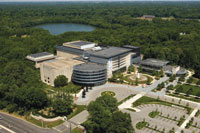
Indianapolis Museum of Art
4000 Michigan Road Indianapolis, Indiana 46208-3326 General switchboard: 317-923-1331 24-hour information line: 317-920-2660 Fax 317-931-1978 Map Email: ima@imamuseum.org www.imamuseum.org
Exhibitions Art of the American Indians: The Thaw Collection Universe Is Flux: The Art of Tawara Yūsaku Brian McCutcheon: Out of this World Looking West Over the period 1870 to 1945 the American West became an increasingly popular sketching ground for eastern artists. The first arrivals were view-painters like Albert Bierstadt and Thomas Moran whose panoramic paintings, reproduced as chromolithographs, brought the unimagined majesty of the Rockies and Sierras to a broad eastern audience. They were followed by reportorial artists such as Frederic Remington and the photographer Edward Curtis intent on preserving artistically and romantically the disappearing frontier and Native American culture. As artists became residents of the west in the early 20th century, their perspective changed, with tidbits of local color replacing the grandiose prospect. This exhibition will bring 51 prints, drawings and photographs to the public, few of which have been shown before, including several never-displayed works by the Pueblo Indians of New Mexico. Forty-seven of the works are from the permanent collection and four from a local private collection.
Revealing the extraordinary range of art produced by Native American cultures, Art of the American Indians: The Thaw Collection features more than 100 of the most outstanding works from one of the premier collections in the country. The exhibition presents an astonishing variety of pieces, including ritual objects, ceremonial clothing, pottery, and basketry. These masterworks provide a glimpse of the diversity of expression found in Native American art, and reflect the importance of the arts in sustaining ancient traditions that still exist today and will endure in the future. This exhibition is organized by the Fenimore Art Museum in Cooperstown, New York.
The Indianapolis Museum of Art will present the first large-scale exhibition of works by Tawara Yūsaku, a contemporary Japanese artist known for his highly energetic brushstroke. Universe Is Flux: The Art of Tawara Yūsaku will feature works inspired by Tawara’s belief that the universe is unstable and constantly changing. Executed primarily in ink on paper, his works use the cumulative effect of many brushstrokes to create powerful and expressive works, apparent in even his smallest 3 in. x 5 in. paintings. Although Tawara eschewed representational art, many of his paintings recall traditional ink landscapes or other forms in nature. Tawara saw all existence as composed of vibrational energy, made up of wavelike forms he called “hado.” Fundamentally based on Buddhist thought, Tawara translated his vision of reality into paintings with intense visual impact. Highlights of the exhibition include several renditions of the Japanese character “ichi,” which means “one.” Traditionally executed in a single stroke in calligraphy, Tawara painted these ichi with his method of layering innumerable brushstrokes. Featuring 77 works, mostly in ink on paper, Universe Is Flux will introduce audiences in the United States to this artist’s unique philosophy and its impact on his paintings. The exhibition will feature works created in the 1990s, following Tawara’s several decade hiatus from painting, as well as pieces created just before his death in 2004. About Tawara Yūsaku Recognized in Japan as a connoisseur, collector and proprietor of a famous folk art shop in Tokyo, Tawara Yusaku returned to painting late in life and had a single show in London before his death in 2004. Universe is Flux is the first examination of his accomplishments within the context of Asian and contemporary painting. The essays by IMA Curator of Asian Art John Teramoto, Stephen Addiss and David Rosand draw on conversations with the artist and notes that he left behind. They discuss how Tawara’s unique methods express his view of art and the universe at large. The essays also examine the work in the context of traditional Japanese and Chinese ink and literati painting, and focus on Tawara’s “Thinking of Leonardo da Vinci” series. Purchase the catalogue from our Museum Store.
Mary Miss’s project titled FLOW: Can You See the River? reveals important and unique elements of the White River water system through a series of installations at stopping points along the river and the canal, engaging visitors and increasing awareness of the watershed and the role that it plays in the life of the city and its inhabitants. Miss’s installation in the IMA’s Efroymson Family Entrance Pavilion serves as an introduction to her expansive project outside the museum’s walls. In a continuation of Miss’s tagline for the FLOW—“All property is riverfront property. The river starts at your door.”—visitors can utilize a large map covering the floor of the Pavilion to locate their homes in relation to local bodies of water. Miss’s indoor installation makes visceral the environmental impact of everyday actions of local residents, by illustrating the watershed in relation to Indianapolis and demonstrating how easily the White River and other bodies of water is impacted by the daily activities of locals. Visit the FLOW microsite for additional information. Known for her environmentally based artwork, Mary Miss lives and works in New York City. She has reshaped the boundaries between sculpture, architecture, landscape design and installation art by articulating a vision of the public sphere where it is possible for an artist to address the issues of our time. Social, cultural and environmental sustainability are the focus of installations that allow the visitor to become aware of local history, ecology or other aspects of the site that have gone unnoticed. Miss has collaborated closely with architects, planners, engineers, ecologists and public administrators on projects as diverse as creating a temporary memorial around the perimeter of Ground Zero, marking the predicted flood level of Boulder, Colorado, revealing the history of the Union Square Subway station in New York City or turning a sewage treatment plant into a public space. A recipient of multiple awards, Miss has participated in exhibitions at the Harvard University Art Museum, Brown University Gallery, The Institute of Contemporary Art in London, the Architectural Association in London, Harvard University’s Graduate School of Design and the Des Moines Art Center.
McCormack Forefront Gallery The solo exhibition Brian McCutcheon: Out of this World features a new body of work by Indianapolis-based conceptual artist Brian McCutcheon. For the exhibition, McCutcheon uses video, photography, and sculpture to explore the relationships between play, masculinity, and the notion of flight. After realizing that his son is currently the same age that he was during the 1969 Apollo 11 moon landing, McCutcheon chose to investigate the duality of father and son relationships through imagery and footage related to space exploration. Visitors will encounter the first work of the exhibition upon entering the IMA’s Pulliam Great Hall, where the base of a currently untitled “flight path” sculpture will be sited. Consisting of a curvilinear metal track, the sculpture traces the imagined trajectory of a toy rocket. With the “launch pad” on the IMA’s second floor, the sculpture will extend three stories before “landing” in the McCormack Forefront Galleries. Within the galleries, Out of this World continues to evolve in a way that mimics a children’s book narrative, including the launch, space travel, and lunar landing, before arriving at the theme of the splash down—the return to reality at the conclusion of the exhibition. For McCutcheon, historical space exploration continues to represent an extreme form of human imagination and will—and an extraordinary leap of risk and faith. McCutcheon's whimsical commissions for this exhibition reflect on how the objects that we associate with these events are peculiarly modern yet nostalgic, highly technological yet fantastical. McCutcheon’s past work has focused on the intersection of masculinity, consumerism and suburban iconography. For example, McCutcheon’s Stud (2001) and Trailer Queen II (2003) are sculptural objects that fuse the customized paint jobs typically adapted for muscle cars and applies them to common objects like Weber grills, creating familiar, but unexpected works that bring together the culture of hot rodding and suburban barbeques. Brian McCutcheon (b. 1965, Traverse City, Michigan) has been the recipient of numerous artist grants, awards, and residencies; most recently a 2010–11 Pollock-Krasner Foundation grant and a summer 2009 residency at Sculpture Space in Utica, NY. McCutcheon taught at the School of the Art Institute of Chicago and currently teaches at the Herron School of Art and Design (Indianapolis). Over the past decade, his work has been featured in a wide range of exhibitions on a national and international scale. McCutcheon is a co-founder and partner of Indianapolis Fabrications (iFab), a custom fabrication studio. He received an MFA from the Cranbrook Academy of Art after earning a BFA from Colorado State University. The artist will discuss his past work as well as the exhibition during a free artist talk, which will be held at 6 pm Thursday, September 8, in The Toby and followed by a ticketed reception in the Amphitheater.
Paul Textile Gallery & Fashion Arts Gallery From court dress to couture, the objects in Material World will feature extravagant ornamentation of textiles and personal adornment from cultures around the world while highlighting the significance of textiles in displaying wealth, status and power. The exhibition will showcase items adorned with luxurious materials including gold and metallic threads, beads, shells, mirrors, semi-precious stones, bones, fur and feathers, ranging from a Buddhist bone apron to Dior and Chanel couture pieces, spanning several centuries to the present day Daily Tours
|
||||||||||||
|
||||||||||||
|
||||||||||||
|
||||||||||||
|
||||||||||||