HOME INDEX EXHIBITIONS EVENTS ABOUT US BLOG LINKS CONTACT US SUBSCRIBE

Frank H. McClung Museum, University of Tennessee

Knoxville, TN

SUPPORT OUR ADVERTISERS. THEY MAKE THIS SITE POSSIBLE
Premium Ad Space
Tsimshian Wooden Mask
Exhibition: Discovering American Indian Art
Tsimshian Wooden Mask

Exhibition: Discovering American Indian Art
Lakota boys vest
Lakota boys vest
Tlingit Octopus bag
Exhibition: Discovering American Indian Art

Tlingit Octopus bag

Egypt Gate
Entrance into the Egytian Gallery
Loon

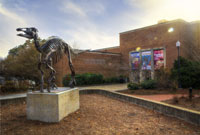
Frank H. McClung Museum
The University of Tennessee
1327 Circle Park Drive
Knoxville, TN 37996-3200
TELEPHONE: (865) 974-2144
FAX: (865) 974-3827
Map

E-MAIL: museum@utk.edu


WEBSITE: http://mcclungmuseum.utk.edu/

The McClung Museum's address, telephone number, and other means of contact are:
ADMISSION

Admission to the McClung Museum is always FREE.

MUSEUM HOURS

The Museum is OPEN:

* Monday through Saturday: 9:00 am to 5:00 pm
* Sunday: 1:00 to 5:00 pm

The Museum is CLOSED:

* New Year's Day
* Easter Sunday
* Memorial Day
* Fourth of July
* Labor Day
* Thanksgiving Day
* Christmas Eve and Christmas Day

The McClung Museum is a general museum with collections in anthropology, archaeology, decorative arts, local history, and natural history. The exhibits document ways of life, cultural trends, and technologies from prehistoric times to the present day, and showcase much of Tennessee's past -- its geology, history, art, and culture. The McClung Museum is a special place -- a place of discovery, a place to learn about the world around us.

As a part of the University of Tennessee, the Museum supports and participates in the University's mission to serve the state, region, and nation through scholarship, teaching, artistic creation, professional practice, and public service.

The professionalism and high caliber of the Museum are reflected in its accreditation by the American Association of Museums. In fact, the McClung Museum is one of only 12 museums in Tennessee to be so recognized.

I invite you to visit the Museum and to enjoy the many experiences we offer. As Lewis, a 4th grader, wrote to us: "It is the best museum in the world."

Exhibition
Discovering American Indian Art
August 29, 2009- January 10, 2010

The new exhibit at the Frank H. McClung Museum, Discovering American Indian Art, represents a selection of approximately 70 American Indian art objects from a remarkable private collection. The pieces come from all over the United States and Canada and represent the artistic achievements of American Indians from ten distinctive culture areas within Native North America. The pieces featured in this exhibit are drawn from a private collection developed over the past thirty years by an adventuresome couple from Tennessee. Their collection is a rich and diverse collection of items produced by Indian peoples throughout all culture areas of Native North America. These beautiful pieces show the exceptional talents of the various artists of the tribes represented and all hold artistic and cultural merit.

All of the artifacts show the broad range of American Indian material culture. They say volumes about the creativity and resilience of Indian peoples, and how they not only incorporated aspects of Euroamerican culture, but how art was employed by Native artists as an expression of ethnic identity, solidarity, and pride.

The works of art span at least 150 years. While some of the pieces, particularly those from the Northwest Coast, are the work of well-known contemporary Indian artists, the majority of the items within this exhibit date to the closing decades of the 19th century. The personal identity of the artists who crafted these objects or those who once owned them is not, in most cases, known. There are a number of historic photographs that show Indian peoples of the past wearing or making items similar to those placed on display. Most of the objects were made for Indian use – frequently family members, extended kin, and others within the artist’s own tribe.

However, some items were made expressly for sale to whites. This was particularly true for the Iroquois of New York and Canada, who produced a wealth of relatively small beaded items – coin purses, hand bags, pin cushions, wall plaques, slippers and caps – that were purchased by tourists who visited Niagara Falls during the late 1800s and early 1900s. Curio art emerged in other locales as well, particularly in the American Southwest. This tradition has grown significantly over the past several decades. For many Indian peoples throughout the United States and Canada, art now represents a major source of income.

Collectively the items within this exhibit represent a wide range of cultural uses. Some were strictly utilitarian in nature, such as baskets crafted for collecting, transporting, and storing wild plant foods. Other items were made for use in restricted ritual or ceremonial contexts. The elaborately carved and painted wooden masks of the indigenous peoples of the Arctic and Northwest Coast are a clear case in point. Some pieces, for example, the pipe bags of the Plains Indians, held both a utilitarian and a religious role. They were intimately connected to the sacred pipe, as well as tobacco, a sacred plant. Many of the specimens pertain to personal attire and adornment, yet here their functional role goes far beyond clothing or
appearance. These items signaled ethnic or tribal identity, status, personal achievements, gender, and the consummate artistic skills of the women who produced and embellished them. The baskets, pottery, weavings, and most of the beadwork were done by women. The production of weapons, hunting tools, and the carving of wood, ivory, stone, and metal fell into the domain of art produced by males. In this sense a large component of Native American art is women’s art. It should also be recalled that Indians of the past never created art simply for the sake of art. Rather, material items that were artistically treated always held functional roles beyond that of aesthetics.

Well over thirty tribal groups are represented by the pieces contained in this exhibit. Each of the ten culture areas of Native North America is also represented by these beautiful items. All who view this exhibit will quickly come to appreciate the primary strengths of this remarkable collection carved masks from the Arctic and Pacific Northwest Coast, and beadwork from the Great Lakes, Northeastern woodlands, and the Canadian Sub-arctic. Items made and used by Indians residing elsewhere – the Plateau and Great Basin, California, the American Southwest, the Great Plains and Prairie grasslands, and the Southeastern woodlands – are also featured in this exhibit. Viewers will gain a sense of the immense range of diversity within the domain of American Indian art.

SPECIAL GUEST SPEAKERS

The Museum is excited to have two speakers share their expertise on American Indian Art. The first, Dr. David W. Penney will present an illustrated talk titled “Native American Art: Land, Sovereignty, and Local Knowledge” on Sunday, September 27 at 2:00 in the Museum auditorium. Dr. Penny is the Vice President of Exhibitions and Collection Strategies at the Detroit Institute of Arts and served as Curator of Native American Art for 24 years. He is the author of the recent book North American Indian Art in the popular World of Art series by Thames and Hudson; the book will be available in the Museum Shop.

The second speaker is John Buxton whose talk will be “The Story Behind the Art – John Buxton’s Experiences in Tribal Art and on the Antiques Roadshow” on Sunday, November 15 at 2:00. John Buxton has been in the antiques and appraisal business for more than 30 years. He is a certified appraiser of personal property with the International Society of Appraisers and has been an appraiser with the Antiques
Roadshow since its first season in 1997.

Support Your Local Galleries and Museums! They Are Economic Engines for Your Community.

Subscribe to Our Free Weekly Email Newsletter!

Advertise with this banner
BACK NEXT
Copyright 2009 Art Museum Touring.com