HOME INDEX EXHIBITIONS EVENTS ABOUT US BLOG LINKS CONTACT US SUBSCRIBE

TENNESSEE STATE MUSEUM

Nashville, TN

SUPPORT OUR ADVERTISERS. THEY MAKE THIS SITE POSSIBLE
Premium Ad Space
postcard of capitol
Exhibition: The People’s House: A Temple of Democracy
State Capitol at Night
Postcard, mid-1900s, published by Capitol News Company of Nashville, Tennessee; selected by Rep. Joe McCord
Plate, late 1800s to early 1900s

1961 photograph of Elvis Presley at Capitol with WSM radio performer Robert Lunn prior to accepting the title “Honorary Colonel” from the Tennessee General Assembly.

1961 photograph of Elvis Presley at Capitol with WSM radio performer Robert Lunn prior to accepting the title “Honorary Colonel” from the Tennessee General Assembly.
Frontier Life
Frontier Life
Tennessee State Museum
505 DEADERICK STREET
NASHVILLE, TN 37243
615-741-2692
TOLL-FREE: 800-407-4324
Map

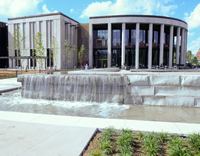
Fifth and Deaderick Streets, in the lower level of the James K. Polk Cultural Center.

Visit the Tennessee State Museum website: www.tnmuseum.org

Tennessee State Museum:

In 1937 the General Assembly created a state museum to house World War I mementoes and other collections from the state, the Tennessee Historical Society and other groups. This museum was located in the lower level of the War Memorial Building until it was moved into the new James K. Polk Center in 1981. The Tennessee State Museum currently occupies three floors, covering approximately 120,000 square feet with more than 60,000 square feet devoted to exhibits.

Open: Tuesday - Saturday: 10 a.m. to 5 p.m.; Sunday: 1 to 5 p.m.
Closed: Mondays and four holidays: New Year's Day, Easter, Thanksgiving, and Christmas.

The Military Museum: Open Tuesday through Saturday10 a.m. through
5 p.m. Closed Sundays and Mondays and the same four holidays.

The State Capitol: Open for guided tours Monday - Friday, 9 a.m. to 4 p.m.

Closed holidays.

Admission: Admission to the museum's permanent exhibits, the Military Museum and the State Capitol is always free. Most temporary exhibits are also free although admission may be charged to some.


Exhibitions:

The People’s House: A Temple of Democracy
150th Anniversary of the Volunteer State Capitol
Selections by the Tennessee General Assembly Arts Caucus
Opens April 1, 2009

This year marks the 150th anniversary of the landmark Tennessee State Capitol building, which was completed in 1859. A special sesquicentennial exhibit, open to the public from April 1 through August 9, 2009, showcases the rich history of this magnificent building and the accomplishments of state government.

Visitors will learn about the construction of the Capitol, which was a triumph of both architecture and engineering, while discovering many exciting stories from the Capitol’s past and the state’s heritage. State Museum Executive Director Lois Riggins-Ezzell calls the Capitol “the ultimate symbol of our state’s achievements and its rich history — it is a true temple of democracy.”  

The State Museum is honored to present this exhibit in partnership with the Tennessee General Assembly Arts Caucus and the Tennessee Arts Commission. “In celebration of the 150th anniversary of the Volunteer State Capitol, members of the Tennessee General Assembly’s Arts Caucus have had the distinct pleasure to work with the State Museum and to choose artifacts for this historic exhibition,” Arts Caucus chairman Senator Doug Overbey (R-Maryville) noted. “Our Capitol has many interesting stories that reflect the rich history of our state. Personal statements made by the individual Arts Caucus members will provide insight behind each object, along with the history that accompanies it. Tennesseans who visit the Museum this spring will have an extraordinary opportunity learn about the tremendous impact that the Capitol has had on our state and on our nation.”

The Tennessee State Capitol stands today, as it did when it was completed a century and a half ago, as a lasting tribute to the people of the state of Tennessee. This graceful structure was designed by preeminent Philadelphia architect William Strickland, who considered it to be his crowning achievement. When Strickland died in 1854, he was laid to rest in the building’s northeast corner, in a tomb of his own design.

The influence of the State Capitol on our nation’s history is shown through the many varied artifacts on exhibit. Shortly after the capitol building was completed in 1859, the Civil War began. Photographs in the exhibit show the Capitol served as a Union fort during the war. In the fall of 1862, the Union army began fortifying the Capitol with earthworks and cannons. From the tall cupola, Union soldiers could scan the surrounding countryside for approaching Confederate soldiers. The building served as an army hospital after the Battle of Stones River in Murfreesboro and as a troop barracks. During this time, Military Governor Andrew Johnson led state government from within the heavily guarded structure. Locals referred to the Capitol as “Fort Johnson.”

The General Assembly voted to ratify the 14th Amendment to the U.S. Constitution in 1866, which granted African-Americans citizenship and paved the way for Tennessee to be readmitted to the Union. African-American men in Tennessee won the right to vote in February 1867 through an act passed by the General Assembly, well before the 15th Amendment to the U.S. Constitution was ratified in 1870. A print illustrating African-Americans gaining rights during Reconstruction is one of the many highlights of the exhibit.

In 1920, the Capitol was once again the scene of a dramatic, historic vote, as the ratification of the 19th amendment enabled women to go to the polls for the first time. Newspaper reporters and supporters crowded the House of Representatives as the vote was taken; several earlier procedural votes ended in a tie. Harry Burn, a young representative from McMinn County, had previously voted against the amendment. After receiving a letter from his mother asking him to support the amendment, he changed his vote and the amendment was ratified. A section of the exhibition will include photographs and stories about three prominent Tennessee women officials who impacted this significant time in American history.

Other exhibit highlights include: an original letter from David Crockett, written in 1834, while he served as a Tennessee congressman; a flag carried by Fifth Confederate Regiment from 1862 -1864; secretary desk with bookcase, 1845-1865, owned by Governor Isham Harris; and the inaugural gown worn by First Lady Betty Dunn in 1971.

This exhibit, offering visitors an intriguing look at the Capitol’s history and our state’s heritage, will feature approximately 100 artifacts including historic documents, paintings, photographs, furniture, and many other items. While highlighting a major milestone in the life of this historic structure, the exhibit will also provide the public with an entertaining and educational look at the Capitol’s fascinating history.

The People’s House: A Temple of Democracy, 150th Anniversary of the Volunteer State Capitol opens at the State Museum on April 1 and continues through August 9, 2009. The Tennessee State Museum is located at Fifth and Deaderick streets in downtown Nashville. The museum is open 10 a.m. to 5 p.m., Tuesday through Saturday and 1 p.m. to 5 p.m. on Sunday. The museum, which is closed on Mondays, is free to the public.

About the Tennessee General Assembly Arts Caucus:
In 2005, House Speaker Jimmy Naifeh, (D) Covington and then Lt. Gov. John Wilder, (D) Mason assisted with the creation of an Arts Caucus within the Tennessee General Assembly. with Naifeh and Wilder serving as the first two founding members. Today, the Arts Caucus boasts a membership of 50 House and Senate members and is led by Senator Doug Overbey (R) Maryville. “The Arts Caucus helps facilitate valuable policy discussion on the importance of the arts in our state. The arts have an economic impact on our communities, define who we are culturally, and should be part of nearly every policy discussion that takes place in the

General Assembly. I am proud to serve as the Chair of this group because I believe the Caucus helps all members of the General Assembly stay informed about the many positive aspects of and the enormous impact of the arts on our citizens.” -- Senator Doug Overbey, (R) Maryville, Chair of the Tennessee General Assembly Arts Caucus. For more information please visit: www.tn4arts.org/ad_caucust.htm


Capitol Memories opens at the State Museum on June 6th

Nashville, Tennessee—May 29, 2009— Since the completion of the Tennessee State Capitol in 1859, the image of this stately historic structure has been used to adorn promotional products, artwork, souvenirs, postcards and many other mementoes. Capitol Memories, an exhibition opening at the State Museum on June 6th will showcase a variety of Capitol souvenirs and images from the museum’s permanent collection. These objects, which are normally not on view to the public, will be displayed as part of the 150th anniversary of the completion of the Capitol.
As part of the exhibit, the State Museum invited the public to
contribute digital images of photographs of the Capitol from
family vacations, school field trips, and other occasions. The images will appear in a media display as part of the Capitol Memories exhibition.
Over the years, many Tennesseans collected items such as postcards, commemorative spoons, and photographs of the Capitol; while many businesses used images of the building in their advertising and packaging materials. And, state officials and employees also preserved mementoes of the Capitol. Through donations and acquisitions, the State Museum, has acquired an impressive collection of Capitol memorabilia.

Highlights of this exhibit include: first-issued U.S. postage stamps for Tennessee’s sesquicentennial in 1946 and bicentennial in 1996; the “Tennessee Waltz” record and sheet music, 1960-1970, autographed by Redd Stewart, Pee Wee King, (songwriters) and Patti Page (vocalist); a 1961 photograph of Elvis Presley at the Capitol with WSM radio performer Robert Lunn; and a collection of spoons and plates from late 1800s to early 1900s.

Capitol Memories will be on view in the museum’s Changing Galleries through August 9, 2009, in conjunction with The People’s House: A Temple of Democracy, which also celebrates the Capitol’s sesquicentennial. The exhibition, organized in partnership with the Tennessee General Assembly Arts Caucus, showcases the rich history of this magnificent building.

Support Your Local Galleries and Museums! They Are Economic Engines for Your Community.

Subscribe to Our Free Weekly Email Newsletter!

Advertise with this banner
BACK NEXT
Copyright 2009 Art Museum Touring.com