HOME INDEX EXHIBITIONS EVENTS ABOUT US BLOG LINKS CONTACT US SUBSCRIBE

Kluge-Ruhe Aboriginal Art Collection of UVa

Charlottesville, VA

1-800-752-1952
Hunt-Wulkowicz Graphics

www.hunt-wulkowicz.com

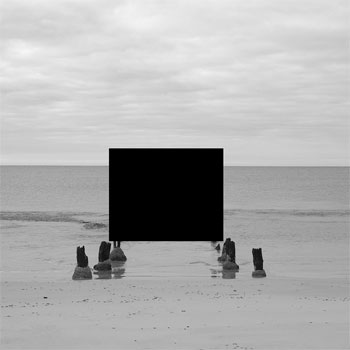
Blacktown Dreaming, 2009
Exhibition:People of Substance
Jason Wing
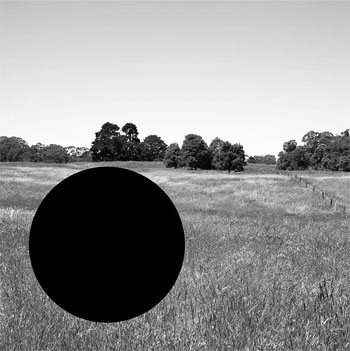
Blacktown Dreaming, 2009
Exhibition: History in the Making: Aboriginal Art of the Twentieth Century
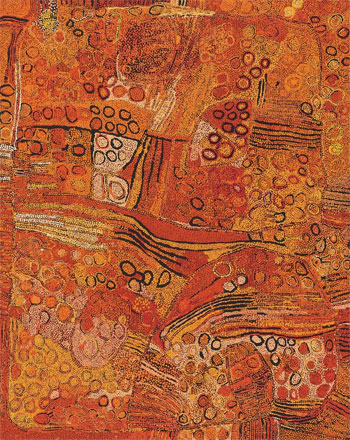
Mick Namarari Tjapaltjarri
MOON DREAMING, 1988
(c) 2011 Aboriginal Artist Agency, Sydney
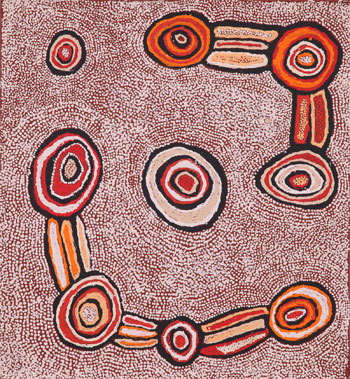
MOON DREAMING, 1988

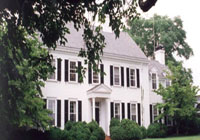
Kluge-Ruhe Aboriginal Art Collection of UVa
400 Worrell Drive, Peter Jefferson Place
Charlottesville, Virginia 22911
(t) 434.244.0234
(f) 434.244.0235
Map

email: Kluge-ruhe@virginia.edu


http://www.virginia.edu/kluge-ruhe/

MUSEUM/EXHIBITION INFO:
Hours: Tuesday through Saturday, 10am – 4pm, Sunday, 1pm – 5pm
Admission is FREE
The Kluge-Ruhe offers a FREE guided tour every Saturday at 10:30am.
Parking is ample and the museum is ADA accessible.

About the Museum
The Kluge-Ruhe Aboriginal Art Collection of the University of Virginia is the largest collection of Australian Aboriginal Art outside of Australia, and came into being in 1997 through a gift by American businessman, John W. Kluge. Influenced by the Dreamings exhibition in New York, Mr. Kluge began collecting Aboriginal art in 1988. Over the next decade he compiled one of the finest private collections of Australian Aboriginal art in the world.

In 1993, Kluge purchased the collection and archives of the late Professor Edward L. Ruhe of Lawrence, Kansas. Ruhe began collecting Aboriginal art while visiting Australia as a Fulbright Scholar in 1965. He built a collection of the highest quality and exhibited it widely in the United States between 1965 and 1977. Ruhe’s research on Aboriginal art resulted in the publication of several exhibition catalogues and articles. His archives comprise the core of the Kluge-Ruhe Study Center.

As part of the University of Virginia, the Kluge-Ruhe Aboriginal Art Collection has undertaken a full program of rotating exhibits, public lectures, research on the collection, and education programs for children and adults. On grounds, works from the Kluge-Ruhe Collection can been seen on the third floor of Newcomb Hall and have been exhibited at UVA Art Museum and Newcomb Art Gallery.


Exhibitions

People of Substance by Jason Wing
May 18 – August 26, 2012

On May 18, the Kluge-Ruhe Collection opens a new exhibition of contemporary Aboriginal art titled People of Substance by Jason Wing. This exhibition includes a variety of site-specific installations by the artist, including Blacktown Dreaming, a bed composed of hypodermic syringes. People of Substance explores the idea that drug and alcohol abuse among Aboriginal people is a by-product of colonization, and addresses the fact that this is often overlooked by mainstream Australia. Rather than reinforce negative stereotypes, Wing aims to openly address the issue of addiction in regards to both Aboriginal Australia and the wider community.

Wing is a Sydney-based artist of Chinese (Cantonese) and Aboriginal (Biripi) heritage. In early 2012, Wing launched a major public art commission titled In Between Two Worlds for the City of Sydney, which engulfs a 200-meter lane in the heart of the Chinatown precinct. After leaving Charlottesville, Wing will participate in a seminar presented at New York University by the International Network for Diasporic Asian Art Research (INDAAR) on the future of Asian art. He is represented by Arc One Gallery in Melbourne. In addition to his ongoing art practice, he is an art therapist for people with physical and mental disabilities.

History in the Making: Aboriginal Art of the Twentieth Century
July 5, 2011 – August 5, 2012

History in the Making: Aboriginal Art of the Twentieth Century presents a chronological look at Aboriginal art from the 1960s to the present. The exhibition features paintings on bark and canvas, sculpture and limited edition prints from Kluge-Ruhe Collection. It explores the changing perceptions of Aboriginal art over the last seventy years, from the early production of bark art, which was regarded as ethnographic, to the international recognition of contemporary Aboriginal art in the fine art world.

Events

Support Your Local Galleries and Museums! They Are Economic Engines for Your Community.

Subscribe to Our Free Weekly Email Newsletter!

Advertise with this banner
BACK NEXT
Copyright 2011 Art Museum Touring.com