HOME INDEX EXHIBITIONS EVENTS ABOUT US BLOG LINKS CONTACT US SUBSCRIBE


Abby Aldrich

Rockefeller Folk

Art Museum


Williamsburg, VA

1-800-752-1952
Hunt-Wulkowicz Graphics

www.hunt-wulkowicz.com

First Hit, 2002
Exhibition: 9/11: The South Tower
Betty Herbert
Virginia Beach
9/11: The South Tower, 2002
oil painting
Exhibition: Art in Clay: Masterworks of North Carolina Earthenware
Clay Sign
Clay Sign
Wallowa Lake, 1927-1928
Exhibition: The Art of Steve Harley
Stephen W. Harley (1863-1947)
American, Oregon
Wallowa Lake, 1927-1928
Unframed: 24 3/4 x 36 1/4in. (62.9 x 92.1cm)
Framed: 26 1/16 x 37 x 1 1/2ub. (66.2 x 95.9 x 3.8cm)
Oil on canvas
Exhibition: The Old Plantation: The Artist Revealed
Unpublished "Hulk", 2009
Exhibition: Material Witnesses Quilts and Their Makers
Maker: Unknown
Oceania, Polynesian Islands
Appliqued Quilt Top with Eagles, ca. 1908
OW: 991/4" x OH: 109 1/2"
Red and white cotton
Purchased with gift funds from Dr. and Mrs. T. Marshall Hahn, Jr., Made in Plynesian Islands

Abby Aldrich Rockefeller Folk Art Museum
The Art Museums of Colonial Williamsburg
326 W. Francis St.
Williamsburg, Va. 23185
(757) 220-7724
Map


http://www.history.org/history/museums/abby_art.cfm

Hours
The museums are open daily and hours of operation vary seasonally.

Admission
Admission to the Art Museums of Colonial Williamsburg is included in the following Colonial Williamsburg general admission passes: One-Day Pass, Two-Day Pass, Annual Pass, CW Hotel Guest Pass, and also the local resident Good Neighbor Pass.

The following ticket options are also available for access to the museums only:

  • One-Day Museum Ticket
    • Adult: $10.00
    • Youth (6-17): $5.00

  • Annual Pass
    • Adult: $20.00
    • Youth (6-17): $10.00

About the Abby Aldrich Rockefeller Folk Art Museum
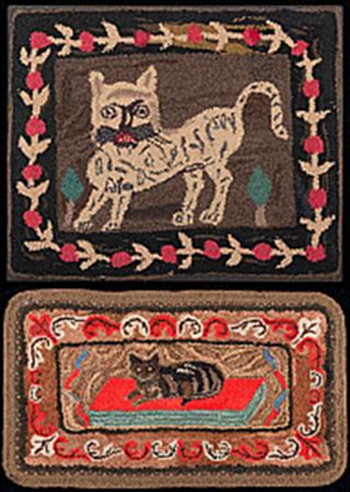
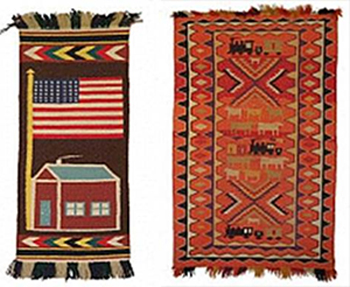
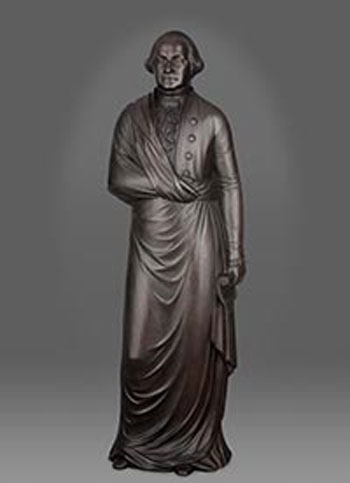
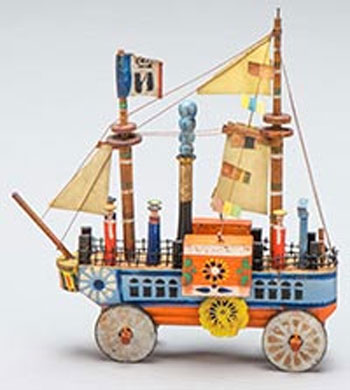
Colonial and contemporary artists and craftspeople work outside the mainstream of academic art to record aspects of everyday life, making novel and effective use of the materials at hand. Bold colors, simplified shapes, and imaginative surface patterns can be seen in the variety of paintings, carvings, toys, needlework they create.

The Folk Art Museum offers changing exhibitions of American folk art from its permanent holdings and museum loan shows.

The Museum Store features an array of distinctive gifts. Items ranging from folk art by contemporary artists to note cards and books complement the museum's collection of American folk art.

The Museum Café offers sandwiches, soups, beverages and desserts.
Open 11-4 daily. Download menu


Current Exhibits

First Hit

Art in Clay: Masterworks of North Carolina Earthenware

The Old Plantation: The Artist Revealed

The Art of Steve Harley

Material Witnesses Quilts and Their Makers

Sidewalks to Rooftops: Outdoor Folk Art

Cross Rhythms Folk Musical Instruments

Down on the Farm

Inspiration and Ingenuity American Stoneware

Conserving the Carolina Room

Exciting Expressions: Painted Furniture

Introduction to American Folk Art


Events

9/11: The South Tower Now on View at the Art Museums of Colonial Williamsburg

Oil Painting By Virginia Beach Artist Captures The Violence of 9/11 Terrorism

“9/11: The South Tower,” the first 21st-century folk art painting acquisition by Colonial Williamsburg’s Abby Aldrich Rockefeller Folk Art Museum, will go on view today in the introductory gallery of the Art Museums of Colonial Williamsburg.

“9/11: The South Tower” is a 2002 oil painting by Virginia Beach artist Betty Herbert that depicts one of the most horrifying moments in recent memory — the September 11, 2001, terrorist attacks on New York City’s World Trade Center.

Herbert began painting in 1983 after learning that her husband, Joe Banks, was terminally ill. Although others encouraged her over the years, she basically taught herself to paint and usually works at home alone. Herbert says the creative process possesses her at times: “I simply start and the canvas dictates to me and I listen.”

Oil paintings dominate Herbert’s output while she occasionally works in other mediums. Various techniques support her bold, spontaneous, and direct application of paint. Some pictures incorporate drips, spatters and runs of paint liberally thinned with turpentine. Others derive more effect from impasto — thickly applied paint — which in “First Hit” seems to underline the violence of the scene.

Colonial Williamsburg purchased “9/11: The South Tower” in 2010 with funds provided by Dr. and Mrs. T. Marshall Hahn, Jr.


Art in Clay: Masterworks of North Carolina Earthenware
Sept. 24, 2011 - July 29, 2012

A new traveling ceramics exhibition exploring the Old World traditions of the early Carolina backcountry opens Sept. 24 in Colonial Williamsburg’s Abby Aldrich Rockefeller Folk Art Museum. “Art in Clay: Masterworks of North Carolina Earthenware” is the first exhibit to celebrate the achievements of North Carolina's 18th- and 19th-century potters.

Highly skilled craftsmen of European and British descent brought a variety of Old World traditions with them to America and transformed clay into slipware dishes with designs reminiscent of 17th-century flower paintings, into pots and jars with vibrant abstract motifs, and into a menagerie of sculptural forms depicting owls, foxes, squirrels and other creatures familiar to early settlers.

“?Art in Clay’ is a ground-breaking effort that illustrates the rich artistic legacy of Carolina’s first earthenware craftsmen,” said Suzanne Hood, Colonial Williamsburg’s associate curator of ceramics and glass. “The show includes masterfully decorated slipware, sculptural bottles and refined creamware.”

The exhibition includes more than 140 objects from distinguished public and private collections, many on display for the first time. Among the most masterful are slipware dishes made by Moravian potters at Salem and Bethabara and contemporary Germanic and British craftsmen in the Carolina Piedmont.

“Art in Clay” will be on view at Abby Aldrich Rockefeller Folk Art Museum through July 29, 2012. A Colonial Williamsburg admission ticket, Museum ticket or Good Neighbor Card is required for admittance. The Art Museums of Colonial Williamsburg are located at 325 E. Francis St. at the intersection of Francis and South Henry Streets in Williamsburg, and are entered through the Public Hospital of 1773. Museum hours are 10 a.m. to 7 p.m. daily. For museum program information, telephone (757) 220-7724.

“Art in Clay” is sponsored by Old Salem Museums & Gardens, the Chipstone Foundation and the Caxambas Foundation. The 2009 and 2010 volumes of the award-winning journal, Ceramics in America, serve as catalogs of the show. In addition to illustrating hundreds of examples of North Carolina earthenware using the latest advances in digital photography, these journals present new research and insights by leading scholars from multiple disciplines.

The Art Museums of Colonial Williamsburg include the Abby Aldrich Rockefeller Folk Art Museum and the DeWitt Wallace Decorative Arts Museum. The Abby Aldrich Rockefeller Folk Art Museum is home to the nation’s premier collection of American folk art, with more than 5,000 folk art objects made during the 18th, 19th and 20th centuries. The DeWitt Wallace Decorative Arts Museum exhibits the best in British and American decorative arts from 1670–1830.

The Colonial Williamsburg Foundation is the not-for-profit educational and cultural organization that preserves and operates the restored 18th-century Revolutionary capital of Virginia as a town-sized living history museum, telling the inspirational stories of our nation’s founding men and women. Williamsburg is located in Virginia’s Tidewater region, 20 minutes from Newport News, within an hour’s drive of Richmond and Norfolk, and 150 miles south of Washington, D.C., off Interstate 64. For more information about Colonial Williamsburg, call 1-800-HISTORY or visit Colonial Williamsburg’s website at www.history.org.

Old Salem Museums & Gardens in Winston-Salem, N.C., is one of America’s most comprehensive history attractions. Its museums — the Historic Town of Salem and the Museum of Early Southern Decorative Arts (MESDA), along with award-winning heirloom gardens — engage visitors in an educational and memorable historical experience about those who lived and worked in the early South. For more information about the museums’ collections and educational programs, please visit www.oldsalem.org.

The Chipstone Foundation is dedicated to promoting American decorative arts scholarship. Originating in the private collection of Stanley and Polly Stone of Milwaukee, Chipstone uses its objects and resources to support progressive scholarship, think tanks, museum projects and digital initiatives, much of which can be accessed at www.chipstone.org and at www.artbabble.org. Since 2001, many of the foundation’s significant holdings have been on view in innovative displays at the Milwaukee Art Museum. Each year, the foundation publishes two scholarly journals: American Furniture and Ceramics in America.

The Caxambas Foundation— established by the late George S. Parker II, former president, CEO and chairman of the board of the Parker Pen Company—is a Milwaukee-based organization dedicated to promoting scholarship in the fields of American history, decorative arts and fine art.


The Old Plantation: The Artist Revealed
February 19, 2011 -
Guyton Gallery.

This exhibition explores one of the great treasures of the Folk Art Museum, a watercolor known as The Old Plantation. It is one of the most published images in the collection. Although in the collection for more than 70 years, very little was known about it until now. Colonial Williamsburg decorative arts librarian Susan Shames used her superb skills as a genealogist and researcher to follow the clues and unearth the history of the drawing, including the identity of the artist. View the art at close range and follow its fascinating tale. The complete account of its history has been published in a new Colonial Williamsburg book of the same title.


The Art of Steve Harley
Through December 2011.

This exhibition showcases the life and work of Steve Harley (1863-1947) who traveled to the Pacific Northwest and was inspired by such places as Wallowa Lake, Wind River and Mount Hood. His paintings capture the natural beauty of the places in stunning color. Only five paintings survive, all of which are owned by the museum and will be shown in the exhibition along with sketches and photographs.


Material Witnesses Quilts and Their Makers
Closes in April of 2012

Material Witnesses: Quilts and Their Makers features textiles made as close as Virginia and as far away as the Polynesian Islands. Colonial Williamsburg curators have uncovered the stories of the past through the study and research of these quilts and coverlets, some of which were created as early as the 1830s.

Like the hieroglyphics of Ancient Egypt, quilts can tell us a lot about the past and the people who created them. Sometimes the meanings are obvious, while other textiles reveal their tales more quietly, their stories teased out only through determined research into the genealogical roots of the makers.

About the Exhibit

* Includes 11 quilts, the earliest of which is dated 1835
* Includes 3 woven coverlets, the earliest of which is dated 1834
* Includes 1 embroidered coverlet

The exhibit is funded by Mary and Clinton Gilliland of Menlo Park, Calif., through the Turner Gilliland Family Fund of the Silicon Valley Community Foundation.


Sidewalks to Rooftops: Outdoor Folk Art
Ongoing exhibit

This exhibit in the Leslie Anne Miller and Richard B. Worley Gallery examines signboards, storefront figures, weather vanes, marine carvings, whirligigs, carousel animals, and other pieces originally intended for use outdoors. These 19th and 20th-century works survived the elements and bear witness to the creative spirit that once enlivened the American landscape. This exhibition was made possible by a gift from Barry M. Boone in loving memory of his wife, Linda.


Cross Rhythms Folk Musical Instruments
Ongoing exhibit

This exhibition in the Elizabeth M. and Joseph M. Handley Gallery features banjos, fiddles, and dulcimers from the nineteenth and early twentieth century. Highlights include a piano built into a chest of drawers and a record-playing hippocerous. Ongoing exhibit in the Elizabeth M. and Joseph M. Handley Gallery.


Down on the Farm
Ongoing exhibit

This exhibition in the Penelope P. and Dr. Sergio V. Proserpi Gallery follows the story of Prince, a carved wooden dog, as he explores the country side. This family-friendly exhibition features animals in paintings, sculpture and toys. Visitors read rhyming text that tells the adventures of Prince as he meets up with weathervane roosters, carved ducks, and wooden horses. Related sticker book and plush toy available in the Museum Store. Ongoing exhibit in the Penelope P. and Dr. Sergio V. Proserpi Gallery.


Inspiration and Ingenuity American Stoneware
Ongoing exhibit.

This exhibition features stoneware pieces from the nineteenth-century through the present day. The exhibition explores the tradition of decorating utilitarian stoneware and its evolution to an art form.


Conserving the Carolina Room
Ongoing exhibit.

This exhibition in the Rex and Pat Lucke Gallery highlights the current research and conservation on a nineteenth-century painted room acquired by the museum in the 1950s. Each board, wainscoat and door have been investigated and treated to bring them closer to their original appearance.


Exciting Expressions: Painted Furniture
Ongoing exhibit.

This exhibition in the Mary and David Peebles Gallery displays case pieces, chairs and boxes that have been embellished with decorative treatments. Plain wooden pieces were made more lively and interesting with color, pattern and designs.


Introduction to American Folk Art
Ongoing exhibit.

This exhibit in the Jan Curtis and Frank J. Spayth Gallery introduces visitors to the museum and to the collector Abby Aldrich Rockefeller. At the beginning of the twentieth century, Mrs. Rockefeller admired the artful expressions of non-academic artists from the past and present. She set out to acquire pieces that reflected the best of the American people. When she died in 1948, she left her extensive collection of folk art to Colonial Williamsburg. John D. Rockefeller, Jr., in honor of his wife, built the museum in 1957 to display the collection.


Calendar

Support Your Local Galleries and Museums! They Are Economic Engines for Your Community.

Subscribe to Our Free Weekly Email Newsletter!

Advertise with this banner
BACK NEXT
Copyright 2012 Art Museum Touring.com