![]() |
|
|
|||||||||
![]() |
|
||||||||||
|
![]() |
||||||||||
|
University Art Gallery
SEWANEE: The University of the South & The Carlos Gallery Georgia Avenue Sewanee TN 37383 Phone: 931-598-1223 Fax: 931-598-3335 www.sewanee.edu/gallery The University Art Gallery The University Art Gallery is located on Georgia Avenue between Guerry Hall and Convocation Hall. It is free, accessible and open to the public. Hours: Tuesday - Friday 10am - 5pm, Saturday and Sunday 12 - 4pm, closed Mondays and during academic breaks. University Art Gallery Exhibition Schedule Pradip Malde: 'Reflectance' Sewanee’s University Art Gallery will open the 2010 – 2011 exhibition season with Pradip Malde’s Reflectance, a series of evocative platinum-palladium prints that juxtaposes uncanny images of ancient Greek sculpture with intimate photographs of the artist’s family members. Malde will present his work in an artist’s talk on Friday, September 3rd at 4:30 in the newly renovated University Art Gallery. A reception will follow. The exhibition will be on view from September 3rd through October 3rd, 2010. Reflectance presents the viewer with a dialogue between two sets of photographs, each “reflected” in the other, “but against a shimmering horizon.” The first group is made up of photographs of Malde’s wife and eldest son. These are not conventional portraits, or representations of individual personalities. Rather than inviting familiarity, the people in these photographs stare out at the viewer, challenging the audience’s gaze. The second set consists of images of ancient Greek sculpture. Like the images of Malde’s family, these faceless, centuries-old sculptures are presented with careful detail, and framed like photographs of individual people. Together the two sets of photographs create a sense of oscillation for the viewer - between knowledge and distance, presence and absence, the passing of a fleeting moment and the timeless. Malde seeks to evoke “those moments when the particulars of what is most familiar and intimate begin to embody what is unfamiliar, universal, and even sublime....” Malde earned his Master of Arts (Design) at the Glasgow School of Art, Glasgow, Scotland. His work has earned national and international recognition, and is represented in many collections, from the Museum of the Art Institute of Chicago, to the Victoria and Albert Museum, London. He has been a member of the Sewanee community and a faculty member in the Art Department of the University of the South since 1989. The platinum-palladium prints in this exhibition were produced with the contemporary ammonium-based platinum palladium process developed by Malde and Mike J. Ware in the 1980s. Nell Breyer: 'After Disappearance' Glenn Herbert Davis: 'a Pale; place into parts' The New English Art Club: 'Contemporary Figurative Painting from Britain' Sewanee Senior Art Majors 2011 Carlos Gallery The art program hosts a lively schedule of small exhibitions by visiting artists and art majors in the Carlos Gallery of the Nabit Art Building. The space was established in honor of Emeritus Professor Edward Carlos by many of his students, friends and colleagues. GALLERY HOURS: GALLERY CONTACT: DIRECTIONS: Exhibition too soon. too much. too soon, a solo exhibition by Mike Calway-Fagen
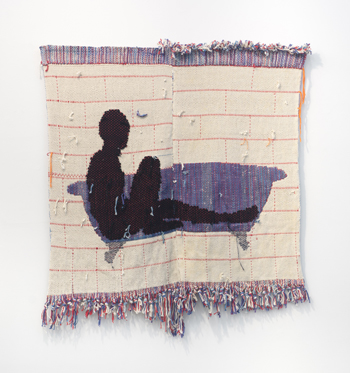
ABOUT THE EXHIBITION We live in a state of fear. We are scared of ourselves and each other; the good intentions of passersby; unexpected occurrences, both natural and man-made; killer bees and shark attacks; hope and defiance; the future and the past. Granted (or wrested) dominion over the earth, the sea, the sky and their inhabitants, we have been at best errant and inattentive, at worst downright dangerous. We worry we will have to pay for our negligence and our hubris, one way or another. We wonder when our debt will be due, and how much we will owe. Though aware that humanity has likely consigned itself and its environment to an inevitable unraveling and final dissolution, Calway-Fagen is neither cynical nor pessimistic. Often, his work is hopeful and idealistic in its criticism: we are complacent, scared and blind, but we can be better. It hinges on the overlaps and (dis)continuities between various realms of existence—animal and human, natural and artificial, permanent and ephemeral, sacred and profane—showing their mutability and lack of fixity. Utilizing found and recycled materials such as cardboard, 1970s-era magazine illustrations, rocks, sticks, and an old jon boat, his is a decidedly recombinant, low-tech and do-it-yourself aesthetic. In tandem with a conceptual and intellectual rigor, Calway-Fagen produces work that is unabashedly both harsh and tender. Unbowed by either the plenitude or the injustice of existence, he brings forth both, asking us to see it all with clear eyes and soft hearts, and without fear. Mr. Calway-Fagen describes the exhibition: "There are the forces that we wield and the systems we have irreversibly altered that will eventually unravel humans. The failure of humans comes much in the same way oneʼs life passes; once you're born you begin to die. Natural phenomena have been labeled incorrectly as “natural disasters”, the semantic difference demonizes and is used to prop up humanity by placing it under attack. Maybe we are under attack. Maybe the animals and the gods and the hurricanes and the earthquakes are mad and are on the offense.
The story of failure is one that will be revised for all time.." |
|||||||||||
|
|||||||||||
|
|||||||||||
|
|||||||||||
|
|||||||||||