|
|
||||||||||||||||||||||||||||||||||||||
|
||||||||||||||||||||||||||||||||||||||
|
ART BLOG
|
SUPPORT OUR
ADVERTISERS |
||||||||||
|
5-12-10 Just Before The War
|
||||||||||||
|
|
||||||||||||
One of the nice things about seeing Art museum Touring is that I see and learn about art objects and I am reminded about many of the things I saw and heard in college. The Westmoreland Museum of American Art in Greensburg, PA, has an exhibition,"Concerning the 1930s in Art", reminds me about the programs that President Roosevelt used to get people back to work during the Great Depression. I was really lucky to take two photography classes with Russell Lee who was one of those WPA and Farm Security Administration photographers. The exhibition I saw at school,“Just Before The War”, was extraordinary. The photographers who were working for what became the Farm Security Administration were told to document the changes in the rural areas and small towns and to get a glimpse of what life was like for the everyday people. Russell Lee wanted us to look for that "significant moment" that would tell the story about that moment. The photographs in this exhibition were by Russell Lee, Walker Evens, Dorothea Lange, Marion Post Wolcott, Jack Delano, John Collier, Arthur Rothstein, Edwin Rosskam, John Vachon, and Ben Shahn, and others.
The government had people doing theater, concerts, visual artists such as Ben Shahn. Thomas Hart Benton did murals in public buildings. For more information about this period, there is a new book to check out, "When Art Worked: The New Deal, Art and Democracy" published in 2009 by Roger G. Kennedy. It is not in the local library, but it is on my list. I have re-read the detailed info in the catalogue, Just Before The War. Grab it if you ever find it in a used book store.
Sherrie |
||||||||||||
|
|
||||||||||||
|
||||||||||||
| Sherrie's Blog 4-7-10 I have been looking forward to seeing the Frank H. McClung Museum exhibition, 2,000 Years of Chinese Art Han Dynasty to the Present and it was worth the trip. The curator and the exhibition staff did an outstanding job presenting the art work and explaining the art as well as the history of this fascinating country. I have looked at and studied Chinese Art, especially the pottery, for years and this really clear and useful. One of the reasons I was so impressed with the information was the way pottery styles, clay, and technology was explained to a extent by the wars, invasions and cultural differences. An invasion could mean no white clay, no coal for kilns or materials, of the kilns were no longer available.
Sherrie |
||||||||||||
| 4-24-10
Japanese Rice Field Art |
||||||||||||
| Every once and a while I get an email from someone that reminds me that the human race and even animails are "hard wired" for art. Neanderthals made jewelry, art objects that along with flowers were found in graves of family members.
I was sent this email a couple of times. You may have seen these pictures; but, I couldn't resist passing it along. Wish I could properly credit the original author and photographer for these pictures. No credits accompanied the email. I'll bet rice field art generates a lot art tourism! - Sherrie "This is absolutely amazing and so beautiful ? we need to look at things like this some to keep us sane ? There is good talent in the world! RICE FIELDS OF JAPAN ? Astounding. Stunning crop art has sprung up across rice fields in Japan, but this is no alien creation. The designs have been cleverly planted. Farmers creating the huge displays use no ink or dye. Instead, different color rice plants have been precisely and strategically arranged and grown in the paddy fields. As summer progresses and the plants shoot up, the detailed artwork begins to emerge. The colors are created by using different varieties. This photo was taken in Inakadate, Japan. Napoleon on horseback can be seen from the skies. This was created by precision planting and months of planning by villagers and farmers located inInakadate.
Farmers create the murals by planting little purple and yellow-leafed Kodaimai rice along with their local green-leafed Tsugaru, a Roman variety, to create the colored patterns. This is done between planting and harvesting in September.
The murals in Inakadate cover 15,000 square meters of paddy fields. From ground level the designs are invisible, and viewers have to climb the mock castle tower of the village office to get a glimpse of the work. Closer to the image, the careful placement of thousands of rice plants in the paddy fields can be seen. Rice-paddy art was started there in 1993 as a local revitalization project, an idea that grew from meetings of village committees. The different varieties of rice plants grow alongside each other to create the masterpieces. In the first nine years, the village office workers and local farmers grew a simple design of Mount Iwaki every year. But their ideas grew more complicated and attracted more attention. In 2005 agreements between landowners allowed the creation of enormous rice paddy art plantings.
A year later organizers used computers for precise plot planting of the four differently colored rice varieties that bring the images to life." - Uknown |
||||||||||||
|
|
||||||||||||
| 1-6-10 The Art of Illumination: Illuminating the Arts | ||||||||||||
Check out this information about a new type of exhibition. I received this press release from the Wolfsonian and I can't wait to go see it. The historic South Beach district with this site at night will be outstanding! Maybe I can hit one of their pub nights.
I will keep you in touch. The Art of Illumination: Illuminating the Arts The Wolfsonian's exterior walls will become exhibition spaces for the display of digital images, thanks to a three-year, $500,000 grant from the John S. and James L. Knight Foundation. The Wolfsonian's initiative, The Art of Illumination: Illuminating the Arts, will utilize lighting systems and digital technology to display images ranging from large-scale reproductions of pieces in the museum's collection to commissioned contemporary works. The exterior displays will be presented in a variety of formats including images, video, film, static and moving text, and interactive mobile technology. The Wolfsonian began this project in 2005, working with New York-based Herves Descottes and L'Observatoire Internationale to develop the concept, |
||||||||||||
| November 4, 2009
Children's Museum of Oak Ridge Oak Ridge Camera Club Salon Exhibit |
||||||||||||
The 61st Annual Camera Club Salon of Oak Ridge, TN has some beautiful photographs in the exhibition. There is, also, a digital slideshow. I'm more of a paper person because while digital pieces maybe have skill, something is lost in the digital version. There are some beautiful pieces in the digital segment; but I enjoy looking at a photo at my own pace.
The Landscape group was strong as was the people and architecture categories. I enjoyed Mike Slay's "Life was a Highway: and Peggy Turner's "Sitting Pretty" and Gretchen Kaplan's "A Serene Place" very much. The Plants category had really outstanding technical pieces such as Rebecca Fairbank's "Fallen Leaf" and "Startazer". Peggy Turner's "The Eyes Have It" is the most unusual cat photo I have seen. Go see the show you will enjoy it, Sherrie. Swallowtail |
||||||||||||
|
October 21, 2009 Contemporary Focus: Hunt Clark, Patricia Tinajero, and David Wolff |
||||||||||||
This exhibition is austere, but inviting. The major multimedia installation piece involved levels of wire attached with tubes of white mylar. The structure had three video monitors showing video on the wire and tubes. Like much contemporary art, the piece is less complicated and more interesting the longer time you spend looking at it. The video shows birds on telephone wires in a loop and seems to have a feeling of being in a city. The paintings of Hunt Clark and and David Wolff had the same effect. They seemed austere at the distance and more and more interesting the closer the viewer comes.
Very interesting work to see. Check it out! I went to the Higher Ground exhibition for the fourth or fifth time. Each time, I have a different favorite. This time it was the Jolley glass, the Delaney portrait and paintings of the smokey Mountains. Sherrie |
||||||||||||
|
|
||||||||||||
| Birds in Art through August 14th at the Frank H. McClung Museum, University of Tennessee |
||||||||||||
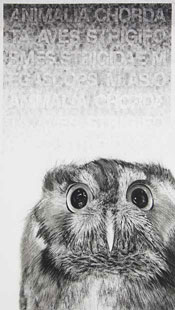
The "Birds in Art" at the McClung Museum was fascinating from the art works to the worksheet for children. The exhibition interprets birds in oil, watercolor, the graphic arts, bronze, wood and stone. The pieces reveal the bird as portrait, as being affected by humans, fierce birds in nature. The large sculpture showing a dead crow made of old automobile tires was fascinating. Mark Eberhard's painting "On The Edge" showing birds on the edge of extinction was very effective.
The worksheet for children was just outstanding. There was a great explanation the art terms of addition or subtraction in making sculpture in reference to art in the exhibition. There were games and areas to draw, maps and information. This is a great addition for children of all ages. - Sherrie |
||||||||||||
|
|
||||||||||||
| Japanese International Artists Society (JIAS) Exhibition at the Ewing Gallery
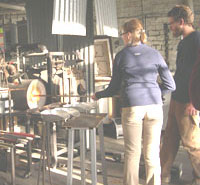
The works were created with vigor much the way Pollock did. I will never think of calligraphy the same way. The papers were huge. The artist had large brushes that were used to make wonderful lines. The potter Sadato Ichinose, did a fascinating demonstration of throwing pottery. I enjoyed watching Mr. Ichinose using traditional throwing sticks to shape the pots. The opening reception was a big ceremony with officials from the city, county, Japanese Consul General from Nashville, and University of Tennessee. There were many artists from Japan who came to see the exhibition. Many of the women wore the traditional dress of Japan.. The Ewing Gallery and the University did a great job organizing the exhibition, the food and the ceremony. A sculptural piece was donated to the University by the JIAS. It is going to be permanently placed in the lobby of one of UT's science buildings to give inspiration to those who look at it. - Sherrie |
||||||||||||
|
|
||||||||||||
| Arms, Legs, Feet, Heart and Soul: The Cumberland Furniture Guild The Knoxville Museum of Art through August 9 |
||||||||||||
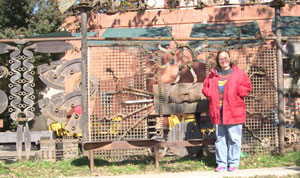
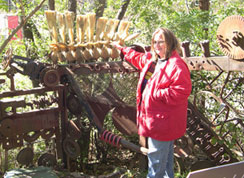
Arms, Legs, Feet, Heart and Soul: The Cumberland Furniture Guild is an exhitition at the Knoxville Museum of Art. I was really interested in when I saw the pictures of the furniture. The exhibition was just a pleasure to see. There was a range of furniture making: traditional, modern design, whimsical pieces, and non-functional art furniture. Tom and I were blown away with the beautiful wood and the ability of the artists. We saw pieces we would love to have in our house. Miles Field has a table, " Chicken Little Table" of over the edge whimsy. The "Music Stand" by Alfred Sharp was just beautiful. I'm a sucker for buckeye burl. Do not miss the awesome " Odd Man Out Table". You need to check out this exhibition. I'm planning another visit.
One thing to watch out for is the exhibition is in two rooms on opposite sides of the main floor. We almost missed seeing the other room. There were no signs we noticed telling us the exhibition was continued on the other side. The last time we had been there that room featured work from the permanent collection. - Sherrie |
||||||||||||
|
|
||||||||||||
|
Oak Ridge Art Center presents Sacred Symbols
May 3 through June 15 , 2009
Kathy Seely's King of Summer (fiber, beads, etc.) is about the Green Man who was the gaurdian of the forces between mankind, nature and diety. Linda Modine's Night Flight of woven fiber was really interesting and the artist statement is wonderful. Mignon Naegeli's Chota is a very interesting piece about an island on Tellico Lake above the ancient townhouse site. Peggy Heddleson's Give Me Flowers was one of her wonderful banners. This is a very interesting and personal exhibition that is neat to see. - Sherrie |
||||||||||||
|
|
||||||||||||
| River of Gold Precolumbian Treasures from Sitio Conte exhibition at the Frank H. McClung Museum through May 3
There were “hammered repousse plaques, nose ornaments, gold-sheathed ear rods, pendants, bells, bangles and beads-as well as ceramic and objects of precious and semi-precious stones, ivory, and bone.” The information about the gold objects and how they were made was very interesting. The gold ore was dug, smelted and then pounded into sheets of gold thin enough to be formed. I had studied Precolumbian art in college and had taken a jewelry class. This exhibition gave me I a much better understand of the technology of the people and the skill of the artisans. Check it out! Sherrie |
||||||||||||
|
|
||||||||||||
| 4-08-09
Knoxville Museum of Art: Josh Simpson: A Visionary Journey in Glass
Simpson's planet series pieces were fascinating. I felt as if I was going into the center of these worlds. There are some beautiful pieces there and the paperweights are really special for the collector. I'm hoping to make another trip to see the Simpson exhibition and really spend some time with the " Higher Ground: a Century of Visual Art in East Tennessee". I was not aware of some of the artists; but there are some beautiful paintings in this exhibition. Make the time to see these. Sherrie |
||||||||||||
|
|
||||||||||||
|
3-24-09
Oak Ridge Art Center Exhibition: From the Collection
The Oak Ridge Art Center is located at 201 Badger Road close to the Museum of Science and Energy in Oak Ridge, TN. - Sherrie |
||||||||||||
|
||||||||||||
|
|
||||||||||||
|
2-16-08
I know that there are a lot of quilters in this area. Well, here is one interesting exhibition. The Museum of the American Quilter's Society (National Quilt Museum in Paducah, KY) has a special regional exhibition "Quilts of the Pacific Rim". This exhibition answers the basic questions: "How do quilt designs differ when made in various regions of the United States?"and " Do Quilts made along the Pacific coast have a certain west coast style".
It would be interesting to see the show in person. No photograph can do true justice to a quilt. Only looking at one in person does the texture, the needlework and the fabrics that are part of the artistry, be seen. You can see other quilts from the show and the National Quilt Museum's (the largest quilt museum in the world) other two current exhibits on their page on Art Museum Touring.com. A friend who has been there told me it is a terrific place to visit especially for quilters and quilt lovers. Sherrie |
||||||||||||
|
2-13-08 Two Exhibitions Opening at the Frist, in Nashville Monet to Dalí: Modern Masters from the This exhibition brings together 84 acclaimed European paintings and sculptures from the late 19th and early 20th centuries, including works by Paul Cézanne, Salvador Dalí, Edgar Degas, Paul Gauguin, Henri Matisse, Claude Monet, Pablo Picasso, Pierre Auguste R Vincent van Gogh (Dutch, 1853–1890). The Poplars at Saint-Rémy (Les peupliers sur la Colline). The Cleveland Museum of Art, Bequest of Leonard C. Hanna Jr. 1958.32. © The Cleveland Museum of Art Curator's Perspective: Surprise Me!: A Closer Look at Impressionist and Modern Masters from the Cleveland Museum of Art Friday, February 15, Noon in the Auditorium, FREE (Information, also, available on the new Events page of Art Museum touring.com) Dr. William H. Robinson, curator of the Monet to Dali exhibition, will present an overview of the Cleveland collection, as well as aspects of his new research on the works of Vincent van Gogh and Pablo Picasso. Since 1992 Dr. Robinson has served as Curator of Modern European Art at the Cleveland Museum of Art, and was appointed as Head of the Department of European and American Painting and Sculpture in 2003. This exhibition has been organized by the Cleveland Museum of Art. Angelo Filomeno
Image: End of Presumption, 2003 Organized by the Frist Ongoing exhibition: Aaron Douglas: African American Modernist
Jan 18-April 13
Upper-Level Galleries |
||||||||||||
|
2-4-08
Major Exhibition at the Vanderbilt Fine Arts Gallery
Nobel Laureate and Guatemalan human rights activist Rigoberta Menchu will speak in honor of the inauguration of the exhibition Of Rage and Redemption: The Art of Oswaldo Guayasamin. (Retrato (potrait) Rigoberta Menchu, 1996 shown left.)
Lecture will take place at 7:00 pm in Benton Chapel (overflow room in Buttrick Hall 101). This landmark exhibition presents the work of one of the most highly regarded Latin American artists of the twentieth century, Ecuadorian painter and graphic artist Oswaldo Guayasamin (1919 - 1999). Of Rage and Redemption: The Art of Oswaldo Guayasamin opens with two concurrent receptions on Thursday, February 7, from 5 to 7 p.m., at the Fine Arts Gallery and at the Sarratt Gallery at Vanderbilt, with the former to be presenting the artist’s paintings and drawings, and the latter his graphic production. Both the lecture and the reception are open to the public. All events are free and open to the public. Of Rage and Redemption: The Art of Oswaldo Guayasamin will be on view from February 7 through March 20, 2008. If you are in the area and have the time, it sounds like a terrific opening to attend! How often do you get to hear a lecture from a Nobel Peace Laureate? |
||||||||||||
|
||||||||||||
|
MEDIA PREVIEW AT THE FRIST AND When Tom and I went to Nashville for the media preview of the exhibitions “Societe Anonyme: Modernism in America” from the Yale collection and “Rosemary Laing: Flight” at the Frist Center for the Visual Arts, I knew I was going to see something special. Jennifer R. Gross, the Seymour H. Knox, Jr. curator of modern and contemporary art at Yale University Art Gallery conducted a guided walk through the “Societe Anonyme” exhibit. She gave information and insight about the artwork and the artists in the exhibition. http://artmuseumtouring.com/Frist.html Walking in to the exhibition was like being back in my art history classes in college while studying for my MFA. There were paintings and artists I had studied, but never seen in person; Josef Albers, Alexander Archipenko, Arthur Dove, Max Ernst, Arshile Gorky, Wassily, Kandinsky, Man Ray, Kurt Schwitters, Joseph Stella, Constatin Brancusi, Francis Picabia, Marcel Duchamp, Piet Mondrian. I had heard about the suitcases of Duchamp with miniature copies of his sculpture (the Urinal - the 1913 Armory Show) and paintings, etc., but, I had never seen one, nor a photograph of one. Well, there is one in this exhibition. Societe Anonyme fills in not only the information that I had forgotten as a student, but the modern art artists and the role of the avant-garde from 1920 - 1940. One of my fond memories of doing the Philadelphia Craft Show years ago with our pottery (other than having work commissioned by Henry McIlhenny then Chairman of the Board of the Philadelphia Art Museum) was going to the Philadelphia Art Museum and walking into an area that was full of late 19TH century and 20TH century art. I have not had the experience of seeing so many of the artists and their work that I had studied in one place again until the “Societe Anonyme”. This exhibition is terrific.
While it was a privilege to be part of the media and get the guided tour (and great coffee), the downside was that the museum closed at noon (We later discovered the upstairs of the Frist was open). I could have spent hours there and am planning on going back as soon as I can. However, that gave us time for us to go see the “More Than One” print show at the Vanderbilt Fine Arts Gallery, a small but very nice gallery in the Old Gym. Two small prints were the first pieces of art that I purchased for myself. I have since purchased and traded for many more. I even took a printmaking class at the UT Knoxville while getting my teaching certificate for Art and History.
|
||||||||||||
|
||||||||||||||||||||||||||||||||||||||||||||